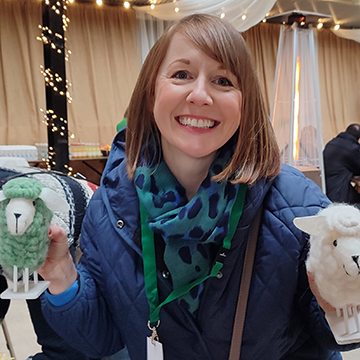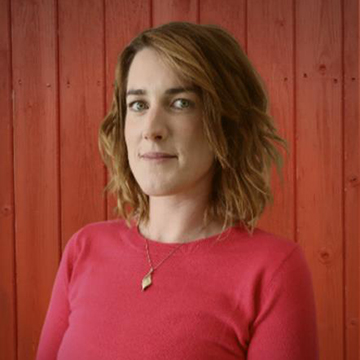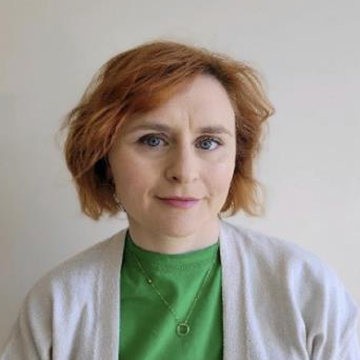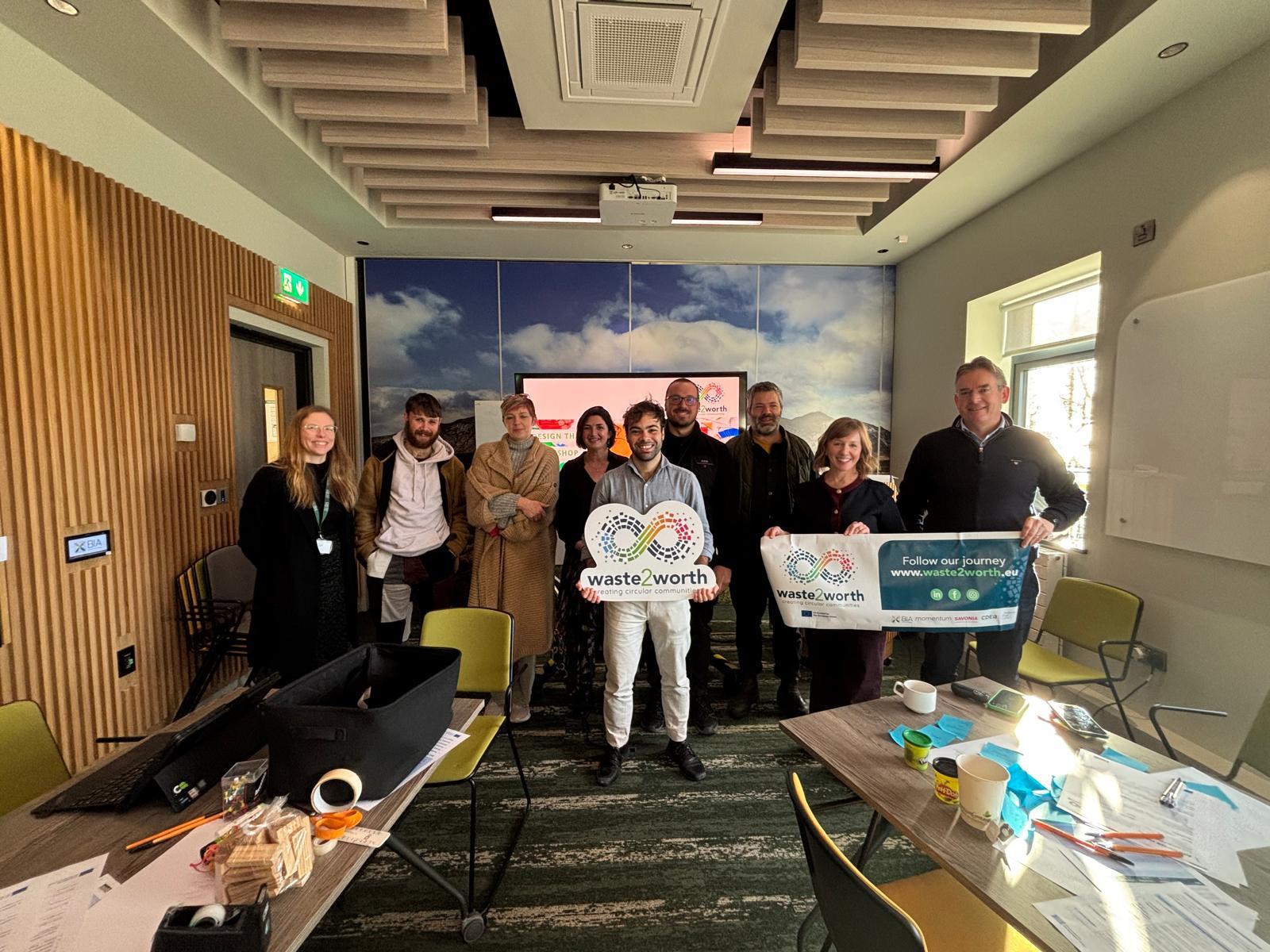
On 24 November 2025, the Waste2Worth project hosted a Regional Collaboration Design Thinking Workshop at the BIA Innovator Campus in Athenry, Galway. The workshop was jointly facilitated by project partners Momentum and BIA Innovator Campus, with Paula Whyte (Momentum) and Pablo Moreno (BIA Innovator Campus) bringing complementary expertise in education, innovation and food-sector collaboration.
The event brought together a diverse group of VET educators, adult educators, students, a sustainability consultant, and agri-food SME representatives, creating a rich environment for cross-sector learning and practical innovation.
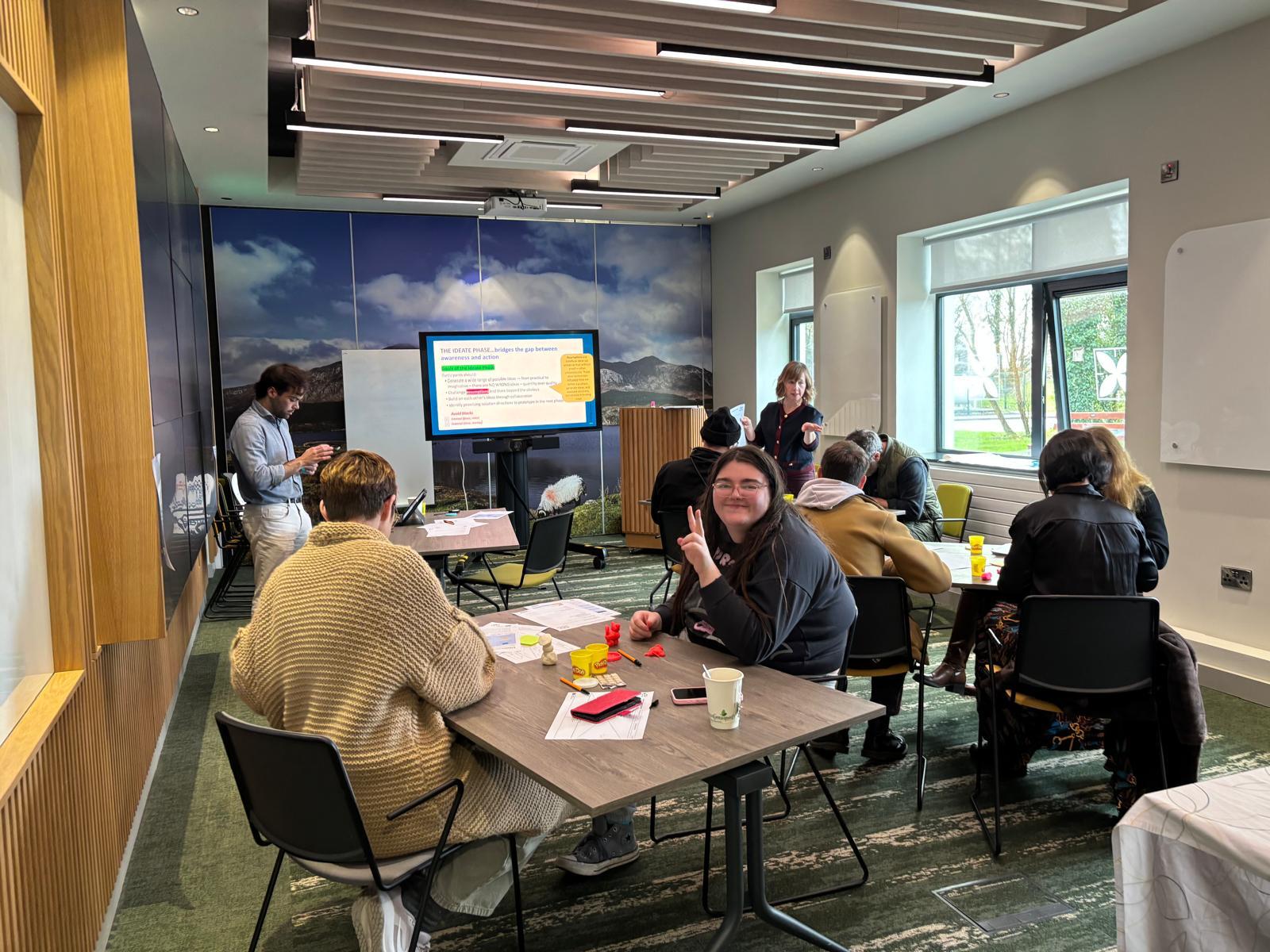
Participants worked in mixed, interdisciplinary teams, following the Waste2Worth Design Thinking Framework and using dedicated W2W templates to guide them through all five stages of the Design Thinking process…from empathy and problem definition to ideation, prototyping and testing. Each team focused on a real challenge experienced by the food SME within their group, ensuring that discussions remained firmly grounded in operational reality.
The three key challenges explored during the workshop were:
- Meat off-cut waste generated in a local hotel kitchen
- Vegetable preparation waste from a regional restaurant kitchen
- Food waste linked to buffet breakfast management, particularly overproduction and consumer behaviour
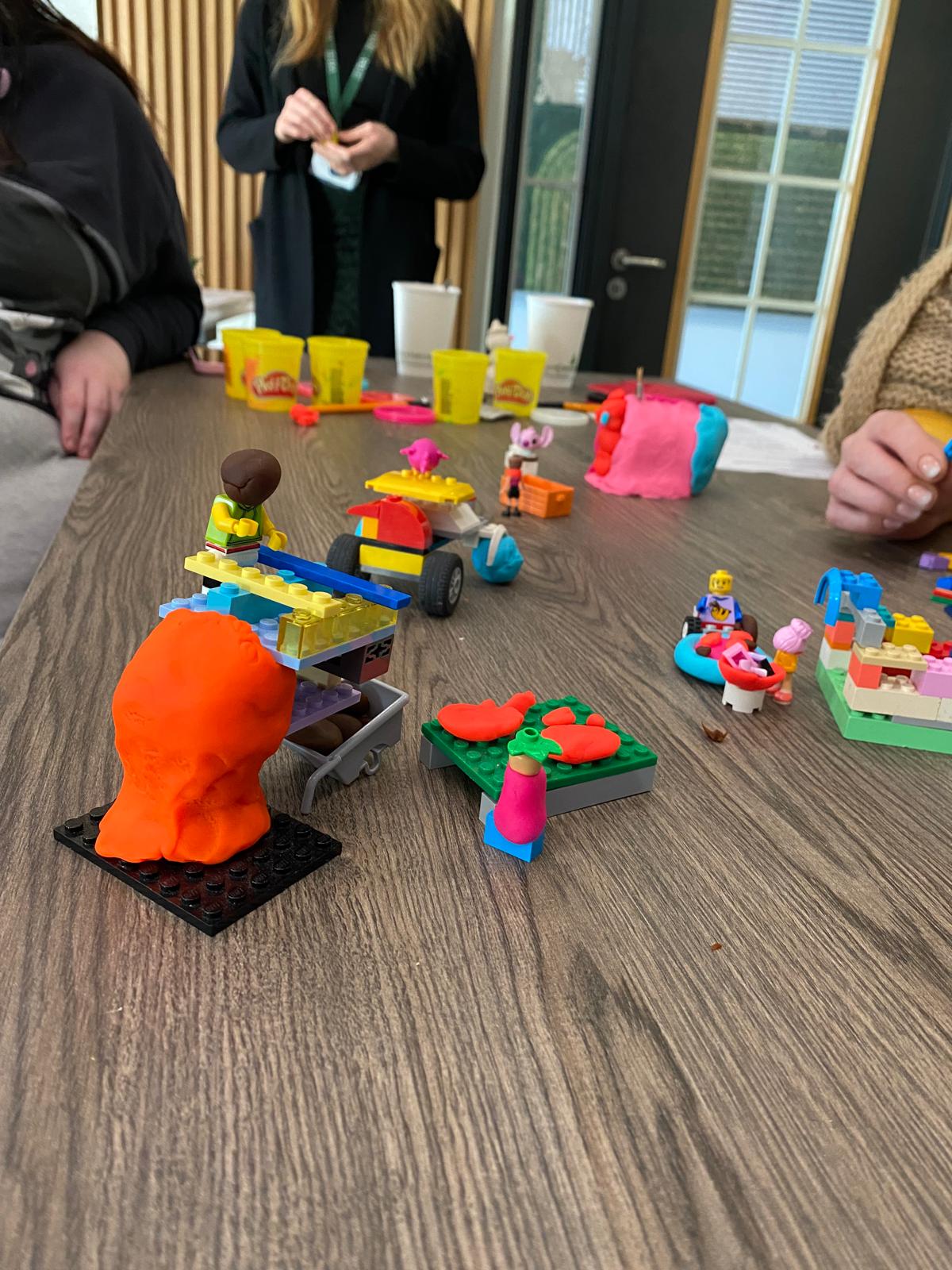
During the prototyping phase, teams were encouraged to “build to think” using mixed media, including LEGO, Play-Doh, paper sketches and simple models. This hands-on approach supported rapid experimentation and helped teams visualise solutions clearly and collaboratively.
Several promising opportunities emerged:
- For meat off-cuts, teams explored producing kitchen stocks, developing pet food products, or initiating collaborations with specialist pet-food providers, alongside discussions on the technology and food safety requirements needed to transform off-cuts into viable products.
- In response to vegetable preparation waste, ideas included producing stocks, powders and garams for internal kitchen use, with careful attention to avoiding the creation of new stockpiles. The potential to develop small-scale retail products was also discussed as a way to add value sustainably.
- For buffet breakfast waste, teams identified consumer and guest education as a critical factor, supported by improved staff habits, clearer communication and shifts in mindset around abundance and choice.
The workshop atmosphere was open, creative and highly engaging, demonstrating the value of strong facilitation and collaboration between education, innovation and industry partners. Each team concluded by developing a simple, realistic action plan, outlining next steps for testing or implementing their ideas.
This regional workshop clearly illustrated how the Waste2Worth approach, supported by committed partners and structured Design Thinking, can unlock practical circular solutions and contribute to more resilient, sustainable local food systems.